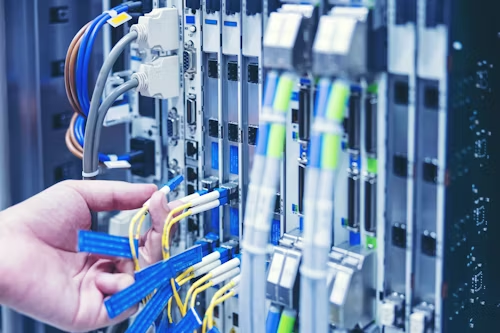
How Structured Cabling Improves Network Performance
Network performance is one of the most important factors that determine how efficiently a business operates. Slow connections, unstable networks, and frequent downtime can reduce productivity, delay communication, and negatively affect customer service. One of the most effective ways to improve network performance is through structured cabling.
Structured cabling is a standardized system of organizing and installing network cables in a clear, efficient, and scalable way. It provides a strong physical foundation for all digital communication within a business. In modern IT environments, it plays a key role in supporting digital transformation, where organizations use technology to improve efficiency, connectivity, and competitiveness. Digital Transformation
Below are the main ways structured cabling improves network performance.
1. Reduces Signal Interference and Data Loss
One of the key advantages of structured cabling is that it reduces signal interference. Poorly organized or low-quality cabling systems can cause data loss, noise, and interruptions in communication.
Structured cabling uses standardized pathways and high-quality materials that minimize electromagnetic interference. This ensures that data travels smoothly and accurately across the network.
As a result, businesses experience fewer errors, faster communication, and more stable connections.
2. Improves Data Transmission Speed
Structured cabling systems are designed to support high-speed data transfer. Whether using copper or fiber optic cables, the system ensures that data moves quickly between devices, servers, and networks.
Fiber optic cabling, in particular, allows for extremely fast data transmission over long distances with minimal loss of speed. Cloud Computing
Faster data transmission improves access to applications, reduces loading times, and enhances overall business productivity.
3. Ensures Stable and Reliable Connections
Network stability is essential for smooth business operations. Structured cabling provides a consistent and reliable connection between all devices in the system.
Because the cabling is properly organized and professionally installed, there are fewer connection failures or disruptions.
This stability is especially important for businesses that rely on real-time communication tools such as video conferencing, VoIP systems, and cloud-based applications.
4. Minimizes Network Downtime
Downtime can be costly for any business. Structured cabling reduces the risk of network failures by providing a clear and well-organized infrastructure.
When issues do occur, they can be quickly identified and resolved because cables are labeled and systematically arranged.
This reduces troubleshooting time and ensures that systems are restored quickly, minimizing disruptions to business operations.
5. Supports High Bandwidth Requirements
Modern businesses generate and transfer large amounts of data daily. Structured cabling systems are designed to handle high bandwidth demands without slowing down performance.
This makes it possible to run multiple applications, cloud services, and communication tools simultaneously without network congestion. Cloud Computing
High bandwidth support is essential for businesses that rely on data-heavy operations such as video streaming, cloud computing, and large database management.
6. Reduces Network Congestion
In poorly designed networks, too many devices or poorly routed connections can lead to congestion and slow performance.
Structured cabling organizes network traffic efficiently, ensuring that data flows smoothly across different segments of the system.
This reduces bottlenecks and improves the overall speed and responsiveness of the network.
7. Improves Network Scalability Without Performance Loss
As businesses grow, they need to add more users, devices, and systems to their network. Structured cabling makes this expansion easier without affecting performance.
New connections can be added without disrupting the existing system or reducing network speed.
This scalability ensures that network performance remains strong even as business demands increase.
8. Enhances System Organization for Faster Maintenance
A well-organized cabling system makes it easier for IT teams to manage and maintain the network.
Technicians can quickly identify faulty cables or weak points in the system without interrupting the entire network.
This leads to faster repairs, less downtime, and improved overall performance.
9. Supports Advanced Business Applications
Modern businesses rely on advanced digital tools such as cloud platforms, enterprise software, and real-time communication systems.
Structured cabling provides the stable and high-speed foundation required to support these applications effectively.
Without a strong cabling system, these tools may experience lag, interruptions, or reduced performance. Digital Transformation
10. Increases Overall Network Efficiency
By improving speed, reliability, organization, and scalability, structured cabling significantly enhances overall network efficiency.
A more efficient network means faster communication, better collaboration, and improved productivity across all departments.
This directly contributes to stronger business performance and customer satisfaction.
Conclusion
Structured cabling plays a vital role in improving network performance by ensuring fast, stable, and efficient data transmission across all business systems.
It reduces interference, supports high bandwidth, minimizes downtime, and allows for easy scalability as businesses grow.
As part of digital transformation, structured cabling provides the strong and reliable foundation needed for modern digital tools and technologies. Digital Transformation
Businesses that invest in structured cabling benefit from improved performance, better reliability, and long-term network efficiency, making it an essential component of modern IT infrastructure.