
Technology Trends Shaping Modern Business
Technology has become one of the most powerful forces influencing how businesses operate, compete, and grow. Over the past few decades, digital innovation has transformed nearly every industry, from retail and finance to healthcare, manufacturing, education, and agriculture. Companies that embrace technological advancements often gain significant advantages in efficiency, customer service, productivity, and profitability.
In today’s rapidly evolving business environment, staying informed about emerging technology trends is essential. Business leaders, entrepreneurs, and employees must understand how new technologies are reshaping markets and creating opportunities for innovation. Organisations that fail to adapt risk falling behind competitors that are using technology to improve operations and meet changing customer expectations.
This article explores the key technology trends shaping modern business and examines how these innovations are influencing the future of work, customer engagement, and organisational growth.
The Growing Importance of Technology in Business
Technology is no longer viewed as a support function within organisations. It has become a strategic asset that drives decision-making, customer engagement, operational efficiency, and business growth.
Modern businesses use technology to:
- Improve communication
- Automate routine processes
- Analyse large amounts of data
- Enhance customer experiences
- Increase productivity
- Reduce operating costs
- Expand into new markets
As digital transformation continues, technology will play an even greater role in determining business success.
Artificial Intelligence (AI)
Artificial Intelligence is one of the most influential technology trends affecting businesses today.
AI refers to computer systems that can perform tasks traditionally requiring human intelligence, such as learning, reasoning, analysing data, and making recommendations.
Businesses use AI for:
- Customer service chatbots
- Predictive analytics
- Fraud detection
- Personalised marketing
- Automated data processing
- Business forecasting
Benefits of AI
- Faster decision-making
- Increased efficiency
- Improved customer experiences
- Reduced operational costs
- Enhanced productivity
As AI technology becomes more accessible, businesses of all sizes are beginning to integrate it into their operations.
Automation and Robotic Process Automation (RPA)
Automation involves using technology to perform repetitive tasks with minimal human intervention.
Robotic Process Automation allows software systems to handle routine business processes such as:
- Data entry
- Invoice processing
- Payroll management
- Customer onboarding
- Report generation
Benefits of Automation
- Reduced human error
- Faster task completion
- Lower labour costs
- Improved consistency
- Greater operational efficiency
Automation allows employees to focus on higher-value activities that require creativity and problem-solving.
Cloud Computing
Cloud computing continues to transform how businesses manage information and technology infrastructure.
Rather than storing data on local servers, businesses use cloud platforms to access applications and information through the internet.
Benefits of Cloud Computing
- Lower infrastructure costs
- Improved scalability
- Enhanced collaboration
- Better data security
- Remote access capabilities
Cloud technology has become particularly important as remote and hybrid work models become more common.
Big Data and Analytics
Businesses generate enormous amounts of data every day. Big data technologies help organisations collect, process, and analyse this information to gain valuable insights.
Companies use data analytics to:
- Understand customer behaviour
- Improve marketing strategies
- Predict market trends
- Optimise operations
- Identify business opportunities
Benefits of Data Analytics
- Better decision-making
- Increased profitability
- Improved customer experiences
- Enhanced operational efficiency
Data-driven organisations often outperform competitors because they can make informed decisions more quickly.
Cybersecurity Technologies
As businesses become more digital, cybersecurity has become a critical priority.
Cyber threats such as ransomware, phishing attacks, and data breaches can cause significant financial and reputational damage.
Modern cybersecurity solutions include:
- Multi-factor authentication
- Encryption technologies
- Threat detection systems
- Security monitoring platforms
- Endpoint protection software
Benefits of Strong Cybersecurity
- Protection of sensitive information
- Increased customer trust
- Reduced business risks
- Compliance with regulations
Cybersecurity investments are now considered essential rather than optional.
Internet of Things (IoT)
The Internet of Things refers to networks of connected devices that collect and exchange data.
Examples include:
- Smart manufacturing equipment
- Connected vehicles
- Smart office systems
- Agricultural monitoring devices
- Energy management systems
Business Benefits of IoT
- Improved operational efficiency
- Real-time monitoring
- Reduced maintenance costs
- Better resource management
- Enhanced customer experiences
IoT technology is helping businesses make smarter decisions through continuous data collection.
Remote and Hybrid Work Technologies
The workplace has changed significantly in recent years, leading to increased adoption of remote and hybrid work technologies.
Businesses now rely on:
- Video conferencing platforms
- Cloud collaboration tools
- Project management software
- Virtual communication systems
Benefits
- Increased flexibility
- Access to wider talent pools
- Reduced office costs
- Improved work-life balance
Many organisations are continuing to invest in remote work technologies as flexible work arrangements become permanent.
Digital Customer Experience Platforms
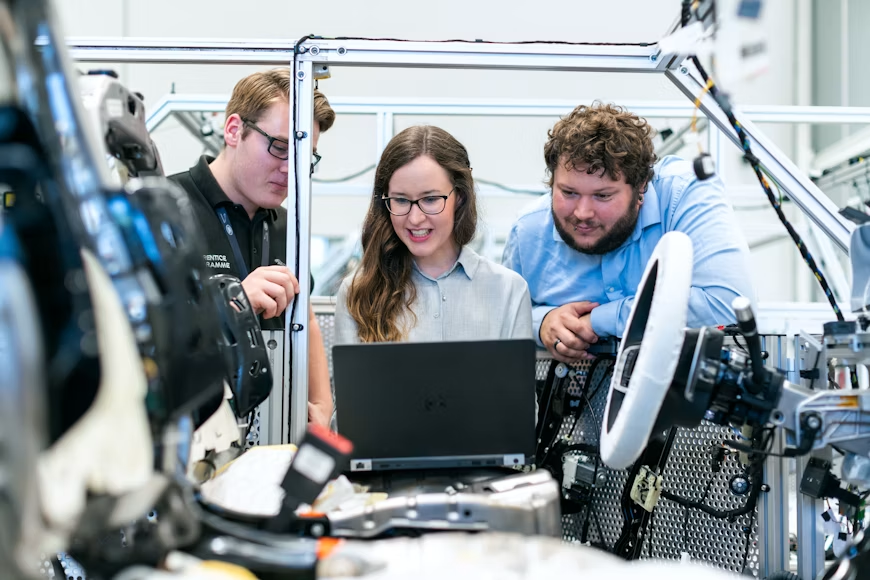
Customer expectations continue to evolve. Businesses are increasingly using technology to deliver seamless and personalised customer experiences.
Technologies include:
- Customer Relationship Management (CRM) systems
- Live chat platforms
- AI-powered customer support
- Personalisation engines
- Customer feedback systems
Benefits
- Improved customer satisfaction
- Higher retention rates
- Increased sales
- Stronger brand loyalty
Customer experience technology is becoming a key competitive advantage.
E-Commerce and Digital Commerce
Online shopping continues to reshape global business.
Modern e-commerce platforms allow businesses to:
- Sell products online
- Process secure payments
- Manage inventory
- Track customer behaviour
Benefits of Digital Commerce
- Wider market reach
- Lower operating costs
- 24-hour sales availability
- Improved customer convenience
Businesses that embrace digital commerce can expand beyond traditional geographic limitations.
Blockchain Technology
Blockchain technology provides secure and transparent methods of recording transactions and managing information.
Although often associated with cryptocurrencies, blockchain has broader business applications such as:
- Supply chain tracking
- Contract management
- Digital identity verification
- Secure record keeping
Benefits
- Increased transparency
- Enhanced security
- Reduced fraud risks
- Improved traceability
Many industries are exploring blockchain for operational improvements.
Green Technology and Sustainability Solutions
Sustainability has become a major business priority.
Technology is helping organisations reduce environmental impact through:
- Renewable energy systems
- Smart energy management
- Sustainable manufacturing processes
- Waste reduction technologies
Benefits
- Lower energy costs
- Improved environmental performance
- Stronger corporate reputation
- Compliance with environmental regulations
Businesses are increasingly integrating sustainability into their technology strategies.
Mobile Technology and Business Applications
Mobile technology continues to influence how businesses operate and engage with customers.
Companies use mobile solutions for:
- Mobile banking
- Mobile sales platforms
- Customer engagement apps
- Workforce management tools
Benefits
- Increased accessibility
- Improved customer convenience
- Greater workforce flexibility
- Faster communication
Mobile technology enables businesses to operate more efficiently in a connected world.
Augmented Reality (AR) and Virtual Reality (VR)
AR and VR technologies are becoming increasingly important in sectors such as retail, training, healthcare, and real estate.
Applications include:
- Virtual product demonstrations
- Employee training simulations
- Remote collaboration
- Customer engagement experiences
Benefits
- Enhanced learning experiences
- Improved customer interaction
- Reduced training costs
- Greater innovation opportunities
Although still emerging, AR and VR are expected to play larger roles in business operations.
The Rise of Digital Transformation
Digital transformation refers to the integration of digital technologies across all areas of a business.
Successful digital transformation involves:
- Modernising business processes
- Adopting new technologies
- Improving customer experiences
- Building data-driven cultures
Organisations that embrace digital transformation are often more agile and competitive.
Challenges Associated with New Technologies
While technology offers many benefits, businesses also face challenges such as:
- High implementation costs
- Skills shortages
- Cybersecurity concerns
- Resistance to change
- Technology integration difficulties
Addressing these challenges requires proper planning, training, and leadership.
Preparing for the Future
Businesses that want to remain competitive should:
- Invest in employee training
- Monitor emerging technology trends
- Strengthen cybersecurity measures
- Develop digital transformation strategies
- Foster innovation and adaptability
Future success will depend on how effectively organisations embrace technological change.
Conclusion
Technology continues to reshape the modern business landscape at an unprecedented pace. Trends such as artificial intelligence, automation, cloud computing, big data, cybersecurity, IoT, and digital commerce are creating new opportunities while transforming traditional business models.
Organisations that understand and adopt these technologies can improve efficiency, enhance customer experiences, reduce costs, and achieve sustainable growth. At the same time, businesses must remain flexible and prepared to adapt as new innovations emerge.
The future belongs to organisations that embrace technological change, invest in digital capabilities, and use innovation to create value for customers and stakeholders. As technology continues to evolve, its influence on business success will only become stronger, making it one of the most important factors shaping the future of commerce and industry.