
The Future of Data Centres
Data centres are the backbone of the digital economy, enabling everything from cloud computing to streaming services and online transactions. As technology rapidly evolves and data generation continues to explode, the future of data centres is poised for significant transformation. This future will be shaped by innovations in computing, energy efficiency, security, and infrastructure design to meet growing demands while addressing environmental concerns.
1. Expansion of Edge Data Centres
One of the most notable trends in the future of data centres is the rise of edge data centres. Unlike traditional, centralized data centres, edge data centres are smaller facilities located closer to end-users. This proximity reduces latency, improves speed, and enhances the performance of applications that require real-time data processing, such as:
- Internet of Things (IoT) devices
- Autonomous vehicles
- Augmented and virtual reality (AR/VR)
- Smart cities and industrial automation
As more devices connect to the internet and generate data continuously, edge computing will become essential for handling this vast influx efficiently.
2. Integration of Artificial Intelligence and Automation
Artificial Intelligence (AI) and automation technologies are set to revolutionize data centre management. AI can optimize operations by monitoring equipment health, predicting failures, and dynamically adjusting power and cooling systems for maximum efficiency. Automation can streamline routine tasks such as patch management, configuration, and security compliance.
Benefits include:
- Reduced operational costs
- Increased uptime and reliability
- Faster incident response times
- Enhanced energy efficiency
AI-driven data centres will become smarter, self-healing systems capable of adapting to changing workloads and conditions without human intervention.
3. Emphasis on Sustainability and Green Data Centres
As global awareness of environmental issues grows, sustainability is becoming a central focus for data centre operators. The energy consumption of data centres is substantial, and the future will see increased efforts to reduce carbon footprints through:
- Using renewable energy sources such as wind, solar, and hydroelectric power.
- Implementing advanced cooling technologies, including liquid cooling and free-air cooling.
- Designing energy-efficient hardware and infrastructure.
- Employing AI to optimize energy use dynamically.
Many tech giants and data centre providers are committing to carbon neutrality or even carbon negativity in the coming decades, driving innovations that not only support technology growth but also protect the planet.
4. Modular and Containerized Data Centres
Future data centres will likely adopt modular and containerized designs. These pre-fabricated units can be rapidly deployed and scaled based on demand. Containerized data centres are portable, easy to install, and allow for flexible expansion.
Advantages include:
- Faster deployment compared to traditional brick-and-mortar facilities.
- Lower upfront capital expenses.
- Enhanced scalability and adaptability.
- Easier upgrades and maintenance.
This trend supports businesses needing quick, reliable data centre capacity without long construction timelines.
5. Quantum Computing Integration
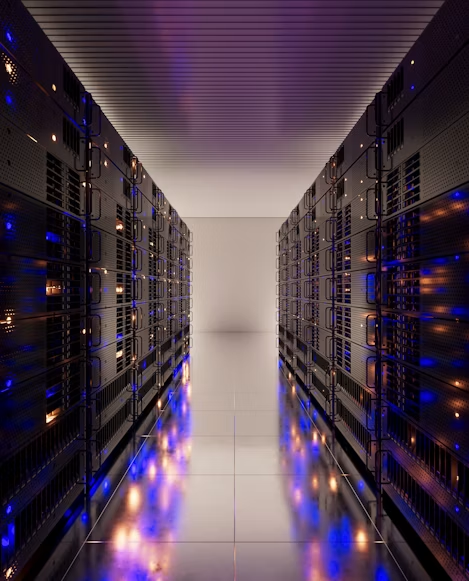
Though still emerging, quantum computing holds the potential to dramatically change data processing capabilities. Quantum computers can solve certain complex problems exponentially faster than classical computers.
In the future, data centres may incorporate quantum processors alongside traditional servers to accelerate tasks such as:
- Cryptography and security operations
- Complex simulations and modeling
- Artificial intelligence training
While widespread quantum computing integration is likely years away, early adoption in specialized data centres could set the stage for a new era of computing power.
6. Enhanced Security Measures
With the increasing value of data and the sophistication of cyber threats, future data centres will require stronger, more intelligent security frameworks. This includes:
- AI-based threat detection and response systems.
- Zero-trust security models that continuously verify user and device credentials.
- Advanced encryption techniques for data at rest and in transit.
- Physical security innovations such as biometric access controls and enhanced surveillance.
Data centres will become fortress-like environments, protecting critical information from both cyberattacks and physical breaches.
7. Hybrid and Multi-Cloud Strategies
The future landscape of data centres will also be influenced by the growing adoption of hybrid and multi-cloud architectures. Organizations leverage multiple cloud providers and on-premises data centres to optimize cost, performance, and redundancy.
Data centres will evolve to support seamless integration and workload mobility across diverse environments, enabling:
- Greater flexibility in resource allocation.
- Improved disaster recovery and business continuity.
- Enhanced data sovereignty and compliance adherence.
This integrated approach will require data centres to be highly interoperable and adaptable.
Conclusion
The future of data centres is dynamic and full of promise. As digital transformation accelerates, data centres will become more distributed, intelligent, sustainable, and secure. Technologies such as edge computing, AI, quantum computing, and modular infrastructure will redefine how data is processed and managed.
At the same time, environmental responsibility will drive innovations to reduce energy consumption and carbon footprints. Organizations will benefit from faster, more reliable, and cost-effective data centre services, fueling growth in cloud computing, IoT, and emerging technologies.
Ultimately, the data centre of the future will be a sophisticated ecosystem—powering our connected world while balancing performance, security, and sustainability.