
Fibre vs. Copper Networking Solutions: An In-Depth Explainer
In today’s fast-paced digital world, the choice of networking solutions can significantly impact a business’s efficiency, productivity, and overall performance. Two primary types of networking media have emerged as frontrunners: fibre optic and copper cables. This article aims to break down these technologies, clarify common misconceptions, and explain their importance to businesses.
Understanding the Basics
What is Copper Networking?
Copper networking refers to the use of copper cables to transmit data. The most common types are:
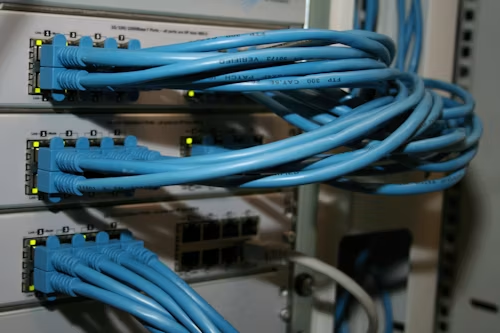
- Twisted Pair Cables: Used in traditional Ethernet networks, these cables consist of pairs of copper wires twisted together to reduce electromagnetic interference. Categories like Cat5e, Cat6, and Cat6a are popular for different speeds and distances.
- Coaxial Cables: Often used for cable television and broadband internet, coaxial cables consist of a central conductor, insulating layer, metallic shield, and outer cover.
What is Fibre Optic Networking?
Fibre optic networking uses light to transmit data through thin strands of glass or plastic. The two main types of fibre cables are:
- Single-Mode Fibre (SMF): Designed for long-distance communication, single-mode fibre has a small core that allows only one light mode to propagate.
- Multi-Mode Fibre (MMF): Used for shorter distances, multi-mode fibre has a larger core and supports multiple light modes, making it suitable for local area networks (LANs).
Key Differences Between Fibre and Copper
1. Speed and Bandwidth
Fibre: Fibre optic cables can transmit data at speeds exceeding 100 Gbps, supporting high bandwidth applications. This makes them ideal for data-intensive tasks like video conferencing, cloud computing, and large file transfers.
Copper: Copper cables typically support speeds up to 10 Gbps, with higher categories offering better performance. However, as bandwidth demands grow, copper may struggle to keep pace, especially in high-traffic environments.
2. Distance Limitations
Fibre: Fibre optic cables can transmit data over long distances (up to several kilometers) without significant signal loss, making them suitable for connecting remote offices or data centers.
Copper: Copper cables are limited in distance, generally effective up to 100 meters for Ethernet connections. Beyond this range, signal degradation and latency become issues.
3. Interference and Reliability
Fibre: Fibre optic cables are immune to electromagnetic interference (EMI) and radio frequency interference (RFI), providing a stable and reliable connection even in environments with high interference.
Copper: Copper cables are susceptible to interference, which can lead to data loss and reduced performance. This is particularly problematic in industrial settings or areas with heavy machinery.
4. Cost and Installation
Fibre: While the initial cost of fibre optic installation can be higher due to the need for specialized equipment and expertise, the long-term benefits often outweigh these costs. Fibre cables are also lighter and thinner, making them easier to install in tight spaces.
Copper: Copper cables are generally less expensive and easier to install, making them a popular choice for small businesses or less demanding applications. However, the need for frequent upgrades and repairs can increase long-term costs.
Common Misconceptions
1. Fibre is Only for Large Businesses
Many believe that fibre optic networks are only suitable for large enterprises. In reality, small to medium-sized businesses can greatly benefit from fibre, especially as data demands grow. Investing in fibre can future-proof their networks.
2. Copper is Outdated and Obsolete
While fibre is gaining popularity, copper cables are not obsolete. Many businesses still rely on copper for their existing infrastructure. Copper can be a cost-effective solution for less demanding applications, but businesses should consider their long-term needs.
3. Fibre is Too Complicated to Implement
The perception that fibre optic technology is overly complex is often exaggerated. With advancements in technology and the availability of trained professionals, implementing fibre networks has become more accessible.
Real-World Examples
- Education Sector: A local school district upgraded its networking infrastructure from copper to fibre optic. This allowed for faster internet access for students and staff, enabling online learning tools and resources to be used effectively.
- Healthcare: A hospital implemented a fibre optic network to connect various departments and facilities. The high-speed connection facilitated real-time access to patient data, improving efficiency and patient care.
- Financial Services: A financial institution transitioned to fibre networking to handle large volumes of transactions securely and quickly. The increased bandwidth and reduced latency enhanced their trading capabilities.
Why This Matters to Businesses
Understanding the differences between fibre and copper networking solutions is crucial for businesses of all sizes. Here are a few reasons why this topic matters:
- Scalability: As businesses grow, so do their networking needs. Investing in fibre can provide the scalability required to accommodate future expansion.
- Performance: High-speed internet is essential for productivity. Businesses need reliable and fast connections to support their operations, especially in an increasingly digital world.
- Cost Efficiency: While the initial investment in fibre may be higher, the long-term savings in maintenance, upgrades, and operational efficiency can make it a more cost-effective solution.
- Competitive Advantage: In a competitive landscape, having a robust and reliable network can give businesses an edge. Faster data transfer, improved communication, and enhanced customer service are all benefits of investing in the right networking solution.
Conclusion
Choosing between fibre and copper networking solutions is a critical decision for businesses aiming to enhance their operations. By understanding the differences, addressing misconceptions, and considering real-world applications, businesses can make informed choices that align with their goals and future needs. As technology continues to evolve, investing in the right networking infrastructure will be key to maintaining a competitive advantage in the digital age.